Thermal Stability & Thermal History Analysis for Organic and Inorganic Materials (Based on TGA)

Understanding how materials behave under heat is critical for quality, safety, and innovation. Thermogravimetric Analysis (TGA) is a powerful technique to evaluate the thermal stability and thermal history performance of both organic and inorganic materials across a wide range of applications.
🎯 Why Thermal Stability Testing Matters
TGA provides essential insights into how materials respond to temperature changes, helping to:
- Ensure quality control during processing and end use
- Select suitable materials for high-temperature applications
- Identify failure mechanisms such as decomposition, oxidation, or phase transitions
- Optimize processing parameters in material synthesis and manufacturing
- Support R&D for the development of advanced heat-resistant materials
🔍 Typical Materials & Thermal Behaviors
Organic materials
Plastics, rubbers, synthetic resins, fibers, coatings, and oils are evaluated for:
- Decomposition onset temperature (Td onset)
- Decomposition rate and stages
- Residual mass after heating
These results reveal chain scission, depolymerization, volatilization, and oxidation behavior.
Inorganic materials
Ceramics, glass, construction materials, refractories, metals, and alloys are analyzed for:
- Decomposition reactions (e.g., carbonates, hydrates)
- Oxidation or reduction behavior
- Phase transitions and high-temperature stability
- Mass gain or loss during heating
⚙️ How TGA Works
TGA measures mass change as a function of temperature or time under a controlled atmosphere.
From TG and DTG curves, key thermal parameters such as decomposition temperatures, reaction stages, and thermal stability limits can be accurately determined.
🧪 Typical Test Conditions
- Temperature range: room temperature up to 1000 °C or higher
- Controlled atmospheres: nitrogen, argon, air, or oxygen
- Sample mass: typically a few milligrams
- Heating rates: commonly 5–20 °C/min
📊 Test Results & Interpretation
A standard TGA report includes:
- Sample and test condition details
- TG & DTG curves
- Key thermal parameters (Td onset, Td peak, mass loss/gain rates)
- Interpretation of thermal behavior based on material type and application
These results help users directly compare materials and make informed decisions for real-world applications.
🔔 Interested in thermal analysis consumables?
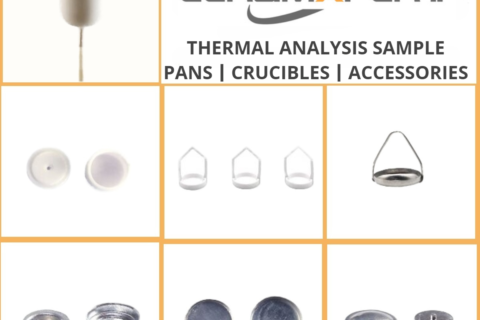
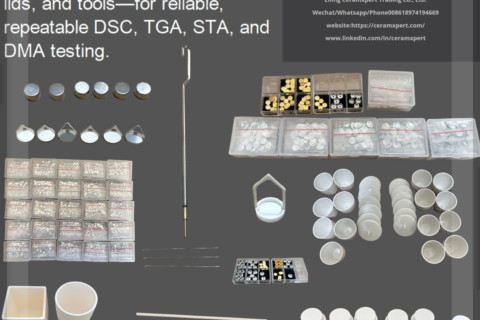
At CeramXpert, we supply high-quality, cost-effective thermal analysis consumables, including:
- Alumina crucibles
- Sample pans & lids
- Sealing tools and accessories
- Compatible alternatives for major TGA/DSC instruments
📩 Feel free to contact us for details or a catalog — we’re happy to support your thermal analysis needs.
#ThermalAnalysis #TGA #MaterialScience #ThermalStability #LabConsumables #Ceramics #Polymers #QualityControl #RAndD #HighTemperature #CeramXpert