Understanding the Challenges of BN and AlN Crucibles in Advanced Nanomaterial Research

Understanding the Challenges of BN and AlN Crucibles in Advanced Nanomaterial Research
At CeramXpert, we continuously engage with researchers and engineers working at the forefront of nanomaterials, battery technologies, functional ceramics, and advanced material synthesis.
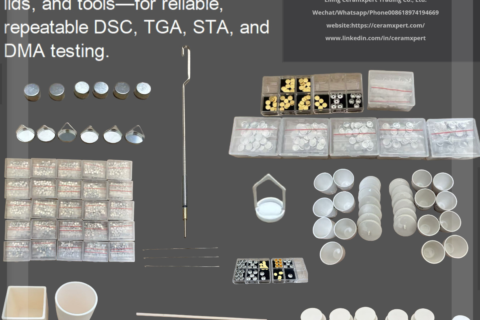
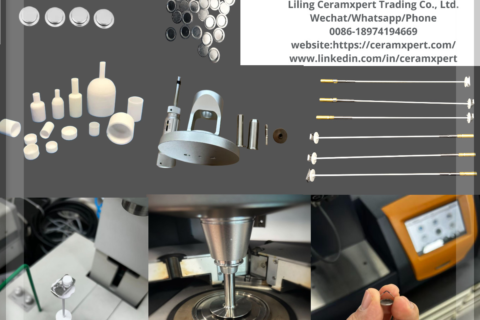
Recently, we had a valuable discussion with a researcher specializing in nanomaterial characterization, thermal analysis (TGA/DSC), high-temperature furnace processing, and spectroscopy. Their work involves the use of alumina (Al₂O₃), zirconia (ZrO₂), and boron nitride (BN) crucibles for nanoparticle synthesis, thin-film deposition, and single-molecule device fabrication.
Their research focuses on areas including battery materials, biosensors, and functional ceramics, where the reliability and purity of laboratory consumables are critical for achieving consistent and reproducible results.
A key topic of discussion was the performance of BN and aluminum nitride (AlN) components under demanding conditions:
🔹 High-temperature and inert atmosphere compatibility
Many advanced material processes require repeated solid-state synthesis and annealing treatments at temperatures above 1200°C, often under argon or forming gas atmospheres. Crucibles must maintain structural stability and chemical inertness throughout these cycles.
🔹 High purity and thermal shock resistance
When processing battery cathode precursors and functional oxide films, even trace impurities or surface reactions can affect material performance. High-purity ceramics with excellent thermal shock resistance are essential.
🔹 Long-term cycling durability
A common challenge reported by researchers is BN crucible degradation after multiple calcination cycles, including microcrack formation and changes in surface activity, which may influence sample purity.
🔹 Customized solutions for research-scale synthesis
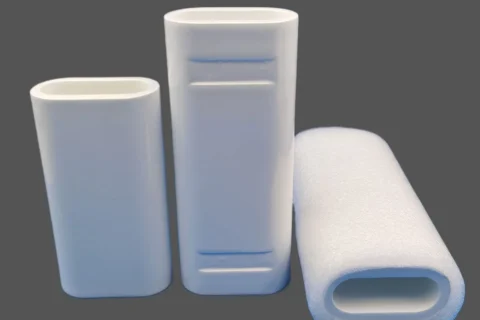
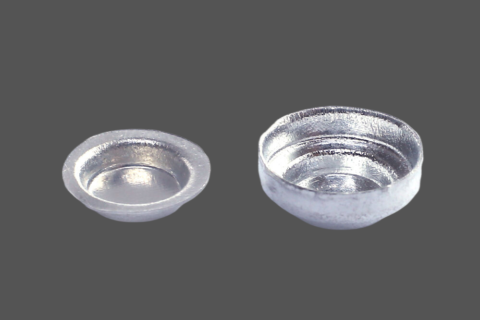
Small-batch nanomaterial synthesis often requires customized geometries, such as shallow trays, covered crucibles, and application-specific designs.
Challenges of Current BN and AlN Crucibles
While domestic BN and AlN materials have improved significantly in recent years, some challenges remain:
Boron Nitride (BN):
- Maintaining ultra-high purity levels for sensitive applications
- Improving resistance to repeated thermal cycling
- Reducing microstructural defects that may lead to performance degradation
- Providing flexible customization for specialized research applications
Aluminum Nitride (AlN):
- Achieving consistent material quality due to complex manufacturing processes
- Improving oxidation resistance during high-temperature exposure
- Balancing performance requirements with cost considerations
For advanced research applications, material selection should consider not only maximum temperature capability, but also:
✅ Purity requirements
✅ Atmosphere compatibility
✅ Thermal cycling behavior
✅ Chemical interaction with samples
✅ Expected service lifetime
✅ Customized design requirements
At CeramXpert, we are committed to supporting researchers with high-performance ceramic components, including BN and AlN solutions, designed for demanding environments such as thermal analysis, high-temperature processing, semiconductor research, energy materials, and advanced ceramics development.
We appreciate the opportunity to communicate with researchers who understand the real-world challenges behind material development. Discussions like these help us continuously improve our solutions and better support scientific innovation.
If you are working with high-temperature synthesis, battery materials, functional ceramics, or advanced material characterization, we welcome the opportunity to exchange insights and explore potential solutions.
#CeramXpert #BoronNitride #AluminumNitride #BNCeramics #AlNCeramics #AdvancedMaterials #Nanomaterials #BatteryMaterials #Ceramics #ThermalAnalysis #TGA #DSC #HighTemperatureMaterials #MaterialsScience #ResearchAndDevelopment #SemiconductorMaterials #LaboratoryConsumables #HighPurityCeramics #MaterialInnovation